More Spaghetti, I Say!
- Sara Zakariah
- Mar 23, 2024
- 2 min read

I believe in providing an enriching environment for children to learn and explore. Taking inspiration from the book "More Spaghetti, I Say! by Rita Golden Gelman", I set out to create a classroom that reflects the theme of the book which was mainly favourite food and an art element - lines. I prepared a theme board filled with images, decorations and songs that compliments how I would introduce the story to the children. These comes with the provision of song charts, pictures to provoke children's reciprocal interactions and storyboard for children to retell the stories themselves!




The pillar in the classroom served as a display for children's pictures. As a firm believer that home-school partnership is vital in developing young children's interest in learning, I encouraged parents to submit an image of their child eating their favourite food. Children took turns to present their picture and shared what they were eating, why they liked it and if they would share it with their class if they had plenty! This provided children the opportunity to develop public speaking skills and self-confidence.
The class also had the opportunity to explore different herbs and spices that are used in cooking, in hopes to allow children to grow their vocabulary and develop a healthy relationship with food. A messy play area was also available for children to explore and pretend that they were making a mess with spaghetti, recreating a scene from the book.

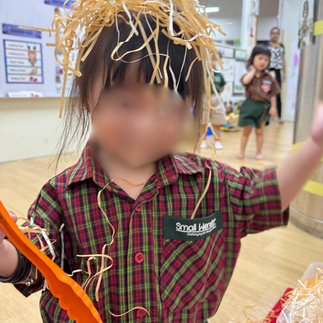

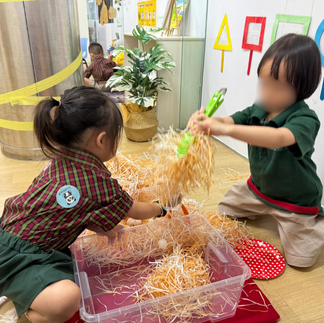



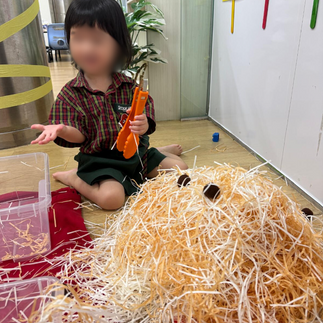

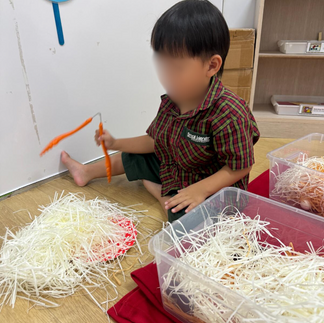


As an educator, I believe that children learn through play. When facilitated properly, they pick up on social skills and learn how to problem-solve with real experiences. Given the autonomy to manipulate the materials in the environment, there was less behaviour management on my part as children were actively engaged in their learning experiences. My observations of children's interaction with the environment I created for them supports what Fettig (2016) wrote on how children are less likely to display challenging behaviours as their levels of independence and self-esteem increases causing their frustration levels to decrease.
The provision of the environment as the third teacher has inspired and influenced my other team members to do the same for their children in their own classroom. I am proud to be able to lead my colleagues in providing children with the best experience in school.
References
Fettig, A., Schultz, T. R., & Ostrosky, M. M. (2016). Storybooks and Beyond: Teaching Problem Solving Skills in Early Childhood Classrooms. Young Exceptional Children, 19(3), 18-31. https://doi.org/10.1177/1096250615576803